
Cincinnati winters bring snow, freezing rain and long stretches of freezing and thawing. Many homes in Hyde Park and Oakley were built in the first half of the 1900s, and older roofs feel that cycle first. Late fall is the time to get ready, while the weather still allows roof work.
Vault Roofing is an Owens Corning Platinum Preferred Contractor serving Hyde Park, Oakley and the rest of Greater Cincinnati. These are the steps we recommend before the first heavy snow, and what to do if winter finds a weak spot anyway.
Winter Roof Prep in Brief
-
Prepare in late fall, before the first hard freeze and the first heavy snow.
-
Clear gutters, balanced attic ventilation and sound flashing keep meltwater moving off the roof.
-
Ice dams start with attic heat. Fix the cause, and never chip ice off the roof yourself.
-
A free inspection before winter shows what needs work now and what can wait until spring.
Inspect the Roof Deck Before Snow Seaso
The roof deck is the layer of wood sheathing under the shingles. The deck and the framing below it carry the weight of the snow. A deck softened by old leaks is where winter problems begin.
You can check part of it from inside. On a dry day, shine a flashlight on the underside of the roof boards in the attic. Dark stains, damp insulation or rusty nail tips point to moisture getting in.
Our free roof inspection covers the shingles, flashing, ventilation and any sign of moisture, with photos of what we find. If the roof needs replacing, we take it down to the deck and replace soft or rotted sheathing before the new roof goes on.
Ensure Proper Attic Insulation and Ventilation
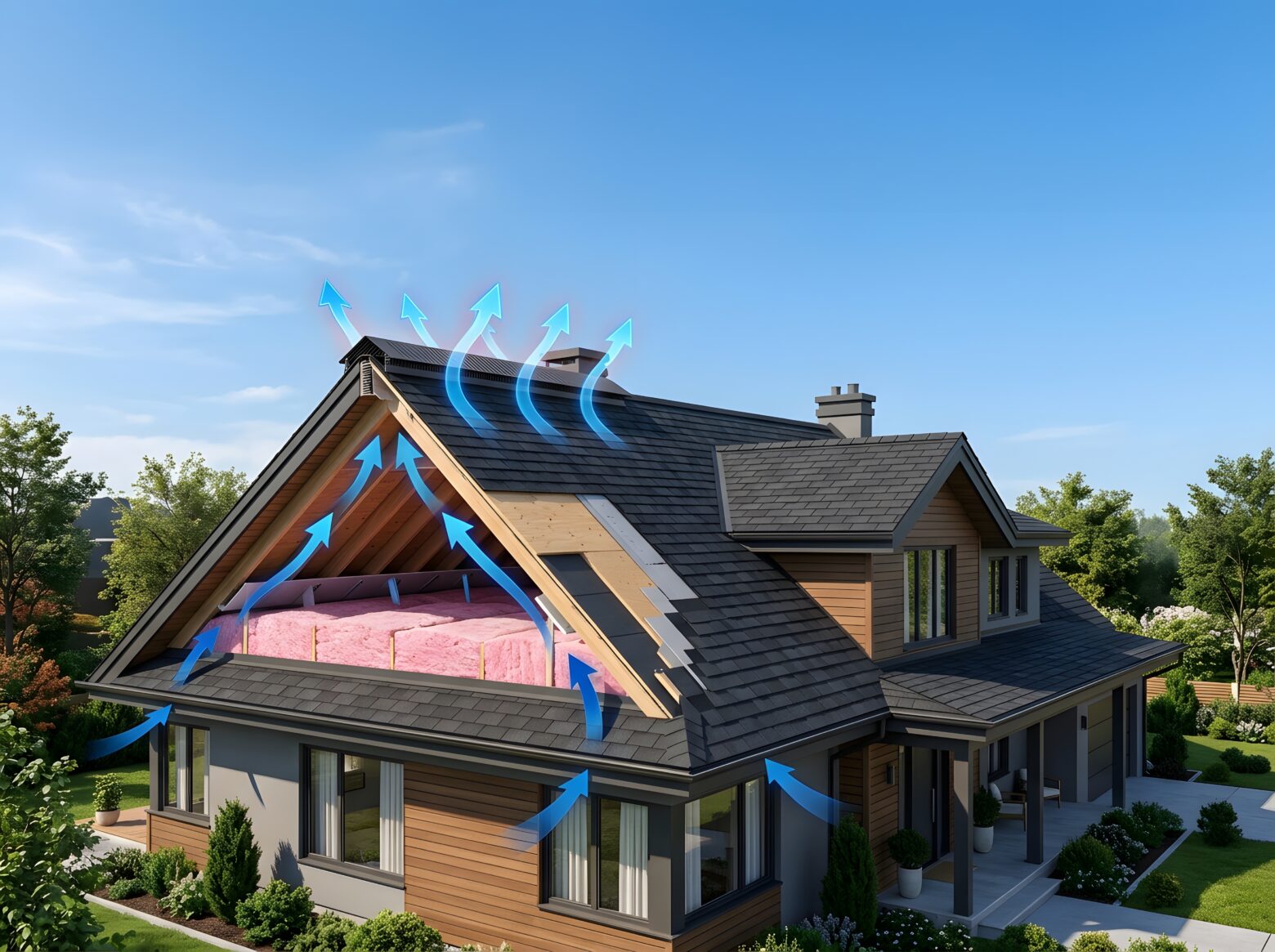
Most ice dams start in the attic. Warm air from the house leaks into the attic and heats the underside of the roof. Snow melts on the warm upper roof, runs down to the cold eave and freezes again.
Insulation on the attic floor keeps house heat below. Ventilation carries off the heat and moisture that still get through, with intake at the soffits and exhaust at the ridge. When the two are balanced, the deck stays close to the outdoor temperature and snow melts evenly.
In older Hyde Park and Oakley homes, attics have often been insulated or remodeled in stages over the decades. Those changes can block soffit vents or leave air gaps around chimneys and ceiling fixtures. We review attic ventilation on every inspection.
Clear Gutters Before the First Hard Freeze
Gutters carry meltwater off the roof all winter. Leaves, pine needles and shingle granules fill them through the fall. A clogged gutter holds water, the water freezes, and the next round of meltwater backs up toward the roof edge.
Clear the gutters and downspouts once most leaves have dropped, and check that downspouts empty away from the foundation. Guards cut down how often gutters need clearing. Fine debris still works through most screens, and every guard needs an occasional check.
Gutters that sag, leak at the seams or hold standing water after rain have usually lost their pitch or their hangers. Vault installs continuous aluminum gutters, formed on site and cut to fit each run. We can talk through guard options during your inspection.
Trim Overhanging Branches and Remove Debris
Hyde Park and Oakley have many mature street and yard trees. Branches over the roof drop leaves and twigs into valleys and gutters. Heavy snow or ice can also bring a limb down onto the shingles.
Have overhanging limbs trimmed back before winter. Have leaves cleared from valleys and from behind chimneys, where they hold moisture against the shingles. Moss and algae hold moisture too, and they are easier to treat in fall than in February.
Use a Roof Rake From the Ground
Snow weight is rarely a problem for the shingles themselves. The structure carries the load, and steep roofs shed much of the snow on their own.
After a heavy storm, a roof rake on an extension pole lets you pull snow off the lower edge of the roof from the ground. Clearing the bottom few feet near the gutters gives meltwater a path off the roof.
Stay off a snowy roof and off ladders in icy weather. Pull gently, leave a thin layer of snow on the shingles and keep the rake away from power lines. Scraping down to the shingle surface knocks granules loose.
Inspect Roof Penetrations and Flashing
Chimneys, vents, skylights and plumbing pipes are where meltwater finds its way in. Flashing seals the joint between the roof and each of them. On older homes, brick chimneys are a common trouble spot as the mortar and flashing wear.
From the ground, look for flashing that has lifted, rusted or pulled away from the brick. Cracked rubber boots around plumbing vents are another early sign. Caulk and roofing cement are temporary patches, and worn flashing needs to be replaced.
On a Vault roof replacement, every transition gets proper flashing and integrated ice and water shield. Ice and water shield along the eaves and valleys blocks backed up meltwater before it reaches the deck.
What to Do If Problems Show Up This Winter
A roof prepared in the fall can still run into trouble in a hard winter. Most problems are easier to fix when they are caught early.
Address Ice Dams Safely
An ice dam is a ridge of ice along the eave that holds back meltwater. The water backs up under the shingles and can reach the deck, the walls and the ceilings below. Thick icicles along the gutters are often the first visible sign.
Do not chip at the ice, throw salt on the roof or climb up with a hose. Each of those damages shingles and puts you on a ladder in icy conditions. Rake the snow off the lower roof from the ground, and call a professional if water is getting inside.
Once the weather allows, have the attic checked. An ice dam is a sign of heat loss, and it will come back each winter until the insulation and ventilation are corrected.
Repair Missing or Damaged Shingles Promptly
Winter wind can lift and crease shingles, and an aging shingle turns brittle in the cold. A missing shingle leaves the underlayment and deck open to every freeze and thaw that follows.
If you find shingles in the yard or see a bare patch on the roof, call for a repair as soon as the weather allows. Plenty of our inspections end with a repair plan and no replacement.
Improve Attic Ventilation to Prevent Recurring Problems
If ice dams come back every winter, the attic is losing heat or trapping moisture. Frost on the underside of the roof deck or on nail tips on cold mornings means warm, damp air is reaching the attic.
The fix can involve air sealing, insulation and ventilation, often more than one of them. We review ventilation on every inspection and correct it during a roof replacement when the existing setup falls short.
Monitor Gutters and Downspouts for Ice Buildup
Gutters can freeze solid during a cold stretch. Watch for icicles along the full length of a gutter, ice at the downspout outlets and gutters pulling away from the fascia.
Do not climb a ladder to clear frozen gutters. Keep downspout outlets clear of snow at ground level, and note any sagging runs for repair in spring. A gutter that freezes in the same spot every winter has often lost its pitch.
Address Water Stains and Ceiling Leaks Quickly
A new stain on a ceiling or upper wall in winter usually traces back to an ice dam, a flashing leak or condensation in the attic. Each one has a different fix.
Move belongings away from the drip, catch the water and take photos. Then call a roofer to find the entry point, and repair the drywall only after the source is fixed.
Our inspectors photograph what they find and give you a written summary you can keep or pass to your insurer.
Reassess Roof Structure After Heavy Snowfall
Heavy, wet snow and ice add a lot of weight in a short time. After a big storm, look for a sagging roofline, new cracks in the ceilings, or doors upstairs that suddenly stick.
If you see any of those signs, rake snow off the lower roof if you can do it from the ground, and call a professional. Stay off the roof.
Schedule an Inspection Before and After Winter
Many homeowners book an inspection once a year and again after a major storm. In Cincinnati, a late fall inspection catches problems before snow arrives, and an early spring visit shows what winter left behind.
A Vault roof inspection is free and carries no obligation. Our inspector checks the shingles, flashing, gutters, ventilation and the attic where access allows. You see the photos and hear the findings before we leave.
Call (833) 897-5670 or schedule your free roof inspection online.
Frequently Asked Questions
How can I tell if my shingles will hold up through another winter?
Look for curling, cracked or missing shingles and heavy granule loss in the gutters. A roof inspection takes a closer look at the flashing, the ventilation and the attic. Small problems can usually be repaired before snow arrives.
How do I prevent ice dams on an older home with little attic space?
Start with the heat loss. Seal the air leaks that let house heat into the attic, add insulation where there is room, and balance soffit intake with ridge exhaust. Ice and water shield along the eaves protects the deck if a dam still forms.
Does the weight of snow damage asphalt shingles?
Rarely. The structure and the deck carry the weight of the snow, and steep roofs shed much of it on their own. The bigger winter concern for shingles is ice damming at the eaves.
When should I prepare my roof for winter in Cincinnati?
October and November are the best months, after most leaves have dropped and before the first hard freeze. Repairs and replacements are easier to schedule and finish before snow and ice arrive.