
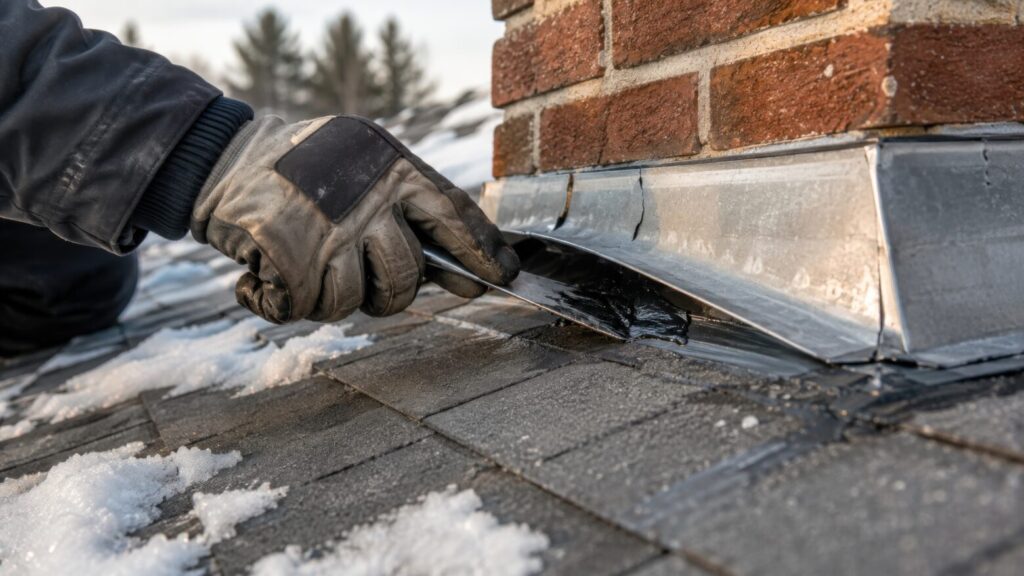
Boston, MA roofs face rain, snow, coastal winds, and frequent freeze-thaw cycles. These conditions stress the areas where roofing materials meet chimneys, vents, walls, and valleys.
Proper flashing keeps these transitions watertight by directing moisture away from vulnerable seams before it reaches the roof deck or interior. Understanding how flashing works and when to inspect it helps you protect your home over the long term.
Key Takeaways
- Proper roof flashing directs water away from vulnerable roof transitions and helps prevent moisture from entering your home.
- Chimneys, vents, valleys, and roof-to-wall connections need properly installed flashing to stay protected from water intrusion.
- Boston weather exposes flashing weaknesses through wind-driven rain, snowmelt, and repeated freeze-thaw cycles.
- Regular roof inspections help identify flashing concerns before repeated moisture leads to larger roofing problems.
How Proper Flashing Keeps Boston Roof Transitions Watertight
Flashing protects the areas of your roof most likely to let water in. Different transitions require precise detailing to safely direct runoff across asphalt shingles and away from the structure.
Directs Water Away From Roof Transitions
Understanding how roof flashing prevents leaks starts with how water moves across a roof. Flashing directs runoff over roofing materials rather than allowing it to run beneath them. This principle connects flashing and roof leak prevention at every vulnerable transition. Proper placement keeps water moving toward the drainage system.
Protects the Base and Sides of Chimneys
Roof flashing around chimneys seals the joint between masonry and roofing materials. Water can collect at these transitions during rain in Boston or when snow melts. Properly installed flashing redirects that moisture around the chimney. This reduces the risk of water reaching the roof deck below.
Seals Transitions Around Roof Vents
Roof flashing around vents protects openings created for ventilation and other roof penetrations. These areas interrupt the continuous shingle surface. Flashing must integrate with surrounding shingles to guide water outward. When it loosens or deteriorates, moisture can enter around the penetration.
Manages Water Where Roof Planes Meet
Roof valleys collect runoff from two adjoining roof planes. This concentrated flow makes careful water management especially important during heavy rain and snowmelt in Boston. Valley systems are a type of roof flashing used to protect vulnerable transitions. Proper detailing keeps runoff moving toward the gutters.
Protects Roof-to-Wall Connections
Roof-to-wall transitions occur around dormers, additions, and other vertical surfaces. Step flashing is typically used where shingles meet a sidewall. Each piece works with the next shingle course to direct water downward. Correct installation prevents moisture from slipping behind siding or roofing materials.
Reduces Exposure During Freeze-Thaw Cycles
The risk of roof flashing failure in New England weather increases when moisture reaches small gaps around flashing edges or seals. As trapped water freezes, it expands and places pressure on those openings. Repeated freeze-thaw cycles can gradually weaken seals and widen vulnerable joints. Proper flashing limits water entry and helps those transitions remain watertight.
When to Inspect Flashing and Address Potential Weak Points
Flashing issues are not always visible from the ground. Specific weather events, physical changes, and moisture patterns can each provide a different reason for inspection.
After Strong Winds and Driving Rain
Strong coastal winds and driving rain can place unusual pressure on roof transitions across Boston. After a significant storm, an inspection can confirm whether those areas continued managing water properly. This timing is useful even when no visible damage appears from the ground.
When Moisture Appears Near a Roof Transition
Interior moisture provides a separate inspection trigger. Water stains near chimneys, vents, or upper walls may indicate an entry point around a transition. Water can travel along framing or decking before becoming visible. A professional roof inspection can help trace the source before the moisture pattern becomes harder to diagnose.
When Flashing Looks Lifted or Separated
Some signs of damaged roof flashing can be visible from the ground or another safe vantage point. Look for lifted metal, gaps, corrosion, or uneven edges near chimneys and walls. These physical changes can affect how water moves across a transition. Avoid climbing onto the roof yourself.
After Repeated Snowmelt and Refreezing
Late winter and early spring are practical times to inspect flashing on a Boston home. Repeated snowmelt and refreezing may reveal new weak points after winter stress. An inspection during this window can identify concerns before spring rain places additional demand on roof transitions.
As the Roof and Flashing Age
Homeowners often ask how long roof flashing lasts, but there is no single lifespan. Material type, installation quality, roof design, and exposure all affect durability. Flashing should be evaluated in relation to the surrounding roofing system. Older roofs may need closer attention as multiple components begin to wear.
When Small Leaks Keep Returning
Intermittent leaks deserve attention because their timing can reveal a recurring water path. A leak that appears only during certain rain directions may indicate a transition weakness. Repetition distinguishes this concern from a single storm event. Inspection can determine whether maintenance or roof replacement is appropriate for the broader roofing system.
Protect Your Boston Home With a Roof Flashing Inspection
Vault Roofing helps Boston homeowners identify flashing issues before small weak points cause interior leaks. If you notice recurring moisture, visible flashing movement, or signs of wear, schedule an inspection before another storm adds more stress to those vulnerable areas.
Protect your home with a clear assessment and straightforward next steps by reaching out through our contact page.
Frequently Asked Questions
What are the most common signs of damaged roof flashing?
Common signs include visible gaps, lifted metal, corrosion, ceiling stains, and moisture near chimneys or vents. Since water can travel along decking or framing, a professional roof inspection can help identify the actual entry point and affected transition.
How does roof flashing around chimneys prevent leaks?
Chimney flashing redirects runoff away from the joint between masonry and surrounding roofing materials. Proper installation helps keep rain and melting snow from entering this vulnerable transition, which is especially important during Boston’s wet weather and winter temperature changes.
How long does roof flashing last on a Boston home?
There is no universal lifespan for roof flashing. Material, installation quality, roof design, weather exposure, and surrounding roofing conditions affect durability. Regular inspections can help determine whether the flashing continues to perform properly as the roofing system ages.
When should Boston homeowners have roof flashing inspected?
Consider an inspection after significant storms, repeated snowmelt, visible movement of flashing, or unexplained interior moisture. Periodic inspections are also useful as roofing materials age because flashing should be evaluated alongside the surrounding shingles, penetrations, and roof transitions.