Detroit homeowners often notice dark grit collecting in gutters or downspouts and wonder whether it signals a serious roof problem. Those small particles are roof granules, and while some loss is normal, excessive granule loss can point to deeper roofing system issues. Michigan weather, from heavy rain to winter temperatures and freeze-thaw cycles, plays a major role in how asphalt shingles age.
Understanding what causes roof granule loss and when to take action helps protect your roof’s condition and avoid costly repairs.
Key Takeaways
- Some granule loss is part of normal wear, but significant granule loss can shorten your roof’s lifespan.
- Detroit weather, including UV rays, heavy rain, ice dams, and freeze-thaw cycles, can accelerate shingle deterioration.
- Granules in your gutters and exposed asphalt on the roof surface are common warning signs that should not be ignored.
- A professional roof inspection helps determine whether roof maintenance, repairs, or a complete roof replacement is the right next step.
Main Causes of Roof Granule Loss and Warning Timing
Roof granule loss does not happen for just one reason. Several factors can knock granules loose or cause shingles to lose their protective layer over time.
Each cause affects the entire roofing system differently, which is why timing and severity matter, especially for homeowners comparing long-term maintenance versus full roof replacement in Detroit.
Normal Wear and Shingle Aging
Asphalt shingles naturally shed a few granules as they age, especially on older roofs throughout Detroit and nearby communities like Dearborn. Over years of sun exposure, the asphalt binder holding protective granules weakens, allowing a few granules to wash into gutters and downspouts.
Minor granule loss from normal wear usually appears gradually and does not immediately lead to roof leaks, but it does signal that the roof’s lifespan is moving closer to its end.
Severe Weather and Michigan Climate Stress
Detroit roofs face repeated stress from severe weather, including heavy rain, strong winds, hail, and winter temperatures. Freeze-thaw cycles cause shingles to expand and contract, which can dislodge granules and damage surrounding shingles.
When weather damage occurs repeatedly, granule loss accelerates and exposes the underlying asphalt layer, often leading homeowners to explore targeted roof repair services before leaks spread further.
UV Rays and Heat Exposure
Constant exposure to UV rays breaks down the protective granules that shield asphalt shingles from heat and sunlight. Once granules wear away, the roof surface absorbs more heat, reducing energy efficiency and speeding up shingle deterioration.
This type of premature granule loss is common on roof slopes with direct sun exposure and often appears as uneven fading or exposed asphalt across the roof surface.
Poor Attic Ventilation
Inadequate ventilation inside the attic traps heat and moisture, which damages roofing materials from below. Poor attic ventilation causes shingles to overheat, weakening the asphalt binder and allowing shingle granules to loosen prematurely.
Over time, this hidden issue affects the entire roofing system and can also contribute to moisture problems that impact attic airflow, insulation performance, and even gutters and drainage systems.
Improper Installation or Foot Traffic
Shingles that were improperly installed may not bond correctly, making them more likely to lose granules early. Foot traffic from maintenance work or inspections can also knock granules loose, especially in roof valleys and roof transitions.
In these cases, granule buildup in gutters often appears shortly after installation or service work rather than later in the roof’s lifespan.
How Detroit Homeowners Can Decide if Action Is Needed
Not all granule loss requires immediate replacement, but ignoring warning signs can lead to mold growth, interior signs of water damage, and multiple leaks.
Knowing what to look for helps homeowners across Detroit and areas such as Clinton Township make informed decisions.
Checking Gutters and Downspouts
Granules in your gutters or downspouts are often the first visible clue of shingle granule loss. A few loose granules after a new roof installation are expected, but ongoing granule buildup points to damaged shingles or accelerated wear.
When gutters become clogged with granules, water drainage suffers, increasing the risk of ice dams and roof problems during winter.
Inspecting the Roof Surface Safely
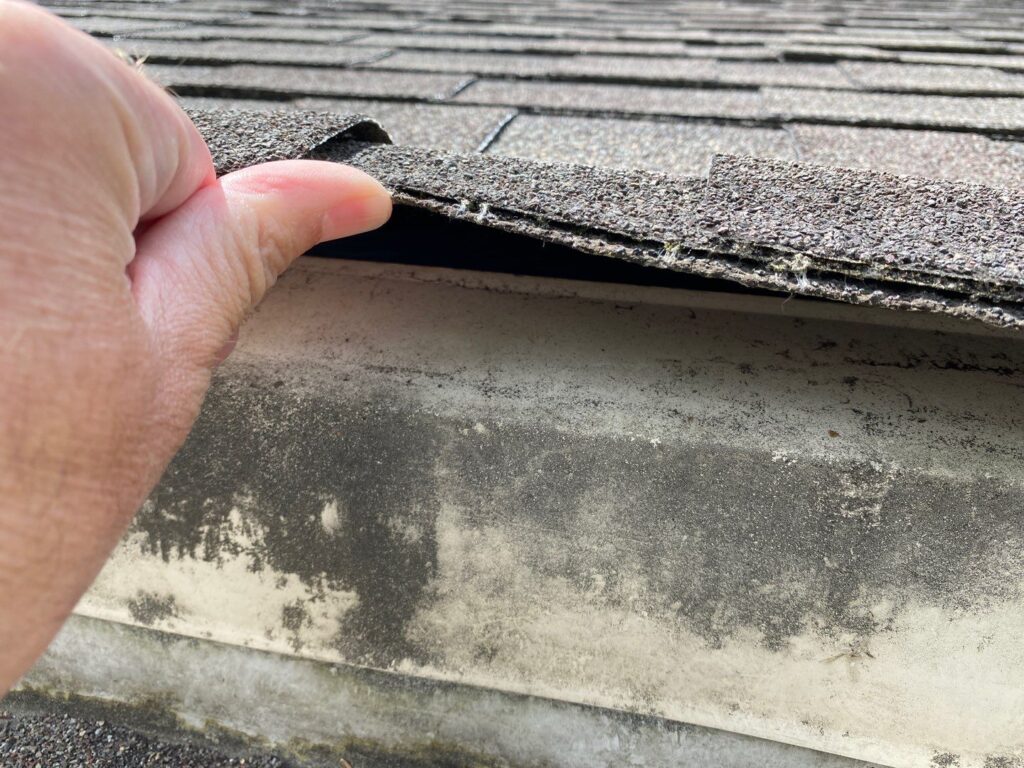
From the ground, homeowners can look for bald spots, uneven coloring, or exposed asphalt on roof shingles. These areas indicate that protective granules are no longer shielding the roof surface.
Visible damage across multiple shingles or roof valleys usually suggests more than minor granule loss and should prompt a professional assessment rather than temporary fixes.
Watching for Interior Warning Signs
Granule loss often leads to roof leaks that show up inside the home as water stains, damp insulation, or mold growth. Interior signs mean the roof deck or asphalt layer may already be compromised.
At this stage, simple roof maintenance is rarely enough, and delaying action can result in costly repairs to both the roof and interior structure.
Scheduling a Professional Roof Inspection
A professional roof inspection provides a clear picture of your roof’s condition and remaining lifespan. Comprehensive roof inspections evaluate shingle granules, ventilation, roof transitions, and the overall roofing system.
For Detroit homeowners, a professional assessment helps determine whether repairs will solve the issue or if a complete roof replacement offers better long-term protection.
Get Your Roof Checked Before Granule Loss Turns Into Damage
Roof granule loss is easier and less expensive to address when caught early.
Rapid by Allstar provides thorough inspections and clear recommendations tailored to Detroit homes and Michigan weather. Contact us to schedule a professional roof inspection and protect your home before small issues turn into major repairs.
Frequently Asked Questions
Is granule loss always a sign that I need a new roof?
Granule loss is not always an immediate sign of roof replacement. Minor granule loss from normal wear is expected, especially on older roofs. However, significant granule loss combined with exposed asphalt or roof leaks often means the roof’s protective layer is failing, and replacement may be the safest option.
How much granule loss is considered excessive?
A few granules in gutters are normal, but excessive granule loss shows up as heavy granule buildup, bald spots on shingles, or granules washing out after every storm. When multiple shingles are affected, it usually indicates widespread shingle deterioration rather than isolated damage.
Can poor ventilation really cause shingle granule loss?
Yes, inadequate ventilation is a common cause of premature granule loss in Detroit homes. Trapped heat weakens the asphalt binder, causing shingles to lose granules faster and reducing overall energy efficiency. Addressing ventilation can slow further damage but may not reverse existing shingle wear.
What is the best next step if I notice granules in my gutters?
The best next step is scheduling a professional inspection with a roofing contractor. A professional inspection identifies whether granule loss is minor, repairable, or part of a larger roofing system failure. Early evaluation helps homeowners avoid temporary fixes and plan for the most cost-effective solution.